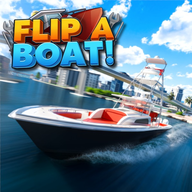
Master the Waves: The Ultimate Guide to Flip a Boat boats and Ship Upgrades
Explore the best Flip a Boat boats, upgrade strategies, and physics-based tips to conquer the high seas in this PolyCore Games hit on Roblox.
Navigating the turbulent waters of modern physics-based games requires more than just luck; it requires a deep understanding of your vessel's capabilities. In the world of PolyCore Games, mastering Flip a Boat boats is the difference between reaching the treasure and sinking to the bottom of the ocean. Whether you are a novice sailor or a seasoned captain, understanding how Flip a Boat boats handle different wave heights and obstacles is essential for long-term progression.
The maritime challenges found within the Roblox community are evolving, and players are constantly looking for the most stable hulls and powerful engines. This guide will break down everything you need to know about the current fleet, from the humble starter raft to the massive, armored dreadnoughts that dominate the leaderboards.
Understanding the Mechanics of Flip a Boat boats
At its core, the gameplay revolves around a sophisticated physics engine that calculates buoyancy, weight distribution, and torque. Unlike traditional racing games where the vehicle is glued to the track, these vessels react dynamically to every ripple in the water.
When choosing between different Flip a Boat boats, players must consider the "Center of Mass." A boat with a high center of mass is significantly more likely to capsize when hitting a rogue wave or taking a sharp turn. Conversely, a boat with a wide, heavy base offers superior stability but often sacrifices the raw speed needed to escape environmental hazards.
According to community reports, the initial learning curve involves mastering the "counter-steer" technique. Because the water is constantly shifting, you cannot simply hold down the forward key. You must actively balance the throttle to keep the bow from dipping too low into the surf, which can lead to a catastrophic flip.
Top-Tier Vessels: A Detailed Comparison
Choosing the right ship is the most important decision you will make before leaving the docks. Below is a comprehensive breakdown of the most popular boat classes currently available in the game, categorized by their primary utility.
As seen in the table above, there is a clear trade-off between speed and stability. The Neon Interceptor may be the fastest of the Flip a Boat boats, but its narrow hull makes it incredibly susceptible to flipping if it hits a wave at the wrong angle. For most players, the Iron Clad represents the "sweet spot" of durability and control.
Customization and Upgrades for Maximum Stability
Once you have selected a base model, the next step is to invest in upgrades. Upgrading your vessel isn't just about making it look better; it's about changing how the physics engine interacts with your ship. Player experience suggests that focusing on "Hull Weighting" early in the game can save you thousands in repair costs.
The Gyroscopic Stabilizer is often cited by veteran players as the single most important purchase. While expensive, it allows even the most top-heavy Flip a Boat boats to remain upright during intense storms. If you are struggling with the physics of the game, saving up for this specific part should be your primary goal.
Navigating Hazards: How to Avoid Capsizing
The environment is your greatest enemy. From whirlpools to sudden squalls, the ocean is designed to test the limits of your ship's design. Understanding how different hazards affect your buoyancy is key to surviving the more difficult maps.
- Whirlpools: These create a downward suction. To escape, you need high torque engines. Do not attempt to steer directly away; instead, steer tangentially to the circle to build momentum.
- Rogue Waves: These appear suddenly and can be twice the height of standard waves. Always hit a rogue wave head-on (perpendicularly). Taking a large wave on the side of the hull is the fastest way to flip.
- Ice Floes: These are solid obstacles. Unlike water, they have high friction. Hitting an ice floe at high speed will cause your boat to launch into the air, often resulting in a flip upon landing.
Community-Driven Strategies and Player Tips
The official Roblox community is a goldmine of information for players looking to optimize their builds. Based on recent discussions and community reports, several "hidden" mechanics have been identified that can give you an edge.
One popular "pro-tip" involves the use of asymmetrical weighting. By placing slightly more weight on the side of the boat you typically turn toward, you can execute much tighter maneuvers without the risk of the outer edge lifting out of the water. This is particularly useful for the "Slalom" challenges where agility is more important than raw speed.
Another player experience highlight is the "Pulse Throttle" method. Instead of holding the gas, players "tap" the throttle in rhythm with the waves. This prevents the nose of the boat from burying itself in the "trough" (the bottom) of a wave, which is a common cause of flipping for faster Flip a Boat boats.
Progression Guide: From Raft to Dreadnought
Progression in the game is tied to both your "Nautical Level" and the amount of currency you have earned through successful voyages. Each new tier of boats requires a specific level to unlock.
To move quickly through the early levels, focus on short-distance cargo deliveries. While the payout per trip is lower, the risk of losing your cargo (and your boat) is significantly reduced. As you unlock more stable Flip a Boat boats, you can begin venturing into the "Dark Seas" where the rewards are tripled, but the waves are significantly more dangerous.
Advanced Hull Engineering: Wood vs. Steel vs. Composite
The material of your boat affects more than just its health points. It changes the "bounciness" of the vessel. In the physics engine used by PolyCore Games, different materials have different coefficients of restitution.
- Wood Hulls: These are very light and have high buoyancy. However, they bounce significantly when hitting waves, which can lead to instability.
- Steel Hulls: These are heavy and sit lower in the water. They are much harder to flip but require much more powerful engines to move at competitive speeds.
- Composite Hulls: The late-game choice. These offer the durability of steel with the weight of wood, though they are the most expensive to repair.
If you are building a custom vessel, the community recommends a "Hybrid" approach: a steel floor for a low center of gravity, with wood or composite upper structures to keep the overall weight manageable.
The Role of Crew and Pets in Boat Stability
While the boat itself is the star of the show, many players overlook the impact of crew members or pets. In recent updates, certain "Navigator Pets" have been added that provide passive buffs to your ship's stats. For example, the "Anchor Crab" pet provides a 5% bonus to stability, making it easier to handle top-heavy Flip a Boat boats.
Similarly, hiring a "First Mate" NPC can automate some of the weight distribution. These NPCs will move to the high side of the boat during a turn, acting as human ballast. While this may seem like a small detail, in high-stakes races, that 5% difference in lean angle can be the difference between a gold medal and a "Game Over" screen.
Conclusion: Mastering the High Seas
Success in this maritime world requires a blend of engineering, strategy, and reflexes. By choosing the right Flip a Boat boats for the task at hand and investing in the correct upgrades, you can transform a frustrating experience into a rewarding journey across the digital ocean. Remember to keep your center of gravity low, respect the power of the waves, and always keep an eye on the community forums for the latest build meta.
FAQ
What is the most stable boat for beginners?
For players just starting out, the Iron Clad is widely considered the best choice. While it isn't the fastest, its heavy steel hull and wide base make it much harder to flip than the starter rafts or the high-speed interceptors.
How do I stop my boat from flipping in high waves?
The best way to prevent flipping is to hit waves at a 90-degree angle (head-on). Additionally, investing in a Gyroscopic Stabilizer or Lead Ballast will lower your center of gravity, making your Flip a Boat boats much more resilient to capsizing.
Are faster boats always better?
Not necessarily. While speed is great for time trials, high-speed boats often have narrow hulls that are very unstable. In maps with large waves or many obstacles, a slower, more stable boat will often reach the finish line faster because it won't spend time being reset after a flip.
Where can I find the latest updates for PolyCore Games?
The best place to stay informed is the official PolyCore Games community page on Roblox. There, you can find patch notes, upcoming boat releases, and tips from the developer and veteran players regarding the latest Flip a Boat boats mechanics.
Related Guides
How to Find, Restore, and Flip a Boat midnight express for Maximum Profit
Learn how to acquire, restore, and sell the massive Flip a Boat midnight express style 40-foot center console for maximum profit in Roblox.
How to Unlock Every Flip a Boat Limited Boat and Dominate the Market
Master the art of boat flipping in Roblox. Learn how to find a Flip a Boat limited boat, repair parts, and maximize profits in this realistic simulator.